Showing posts with label story. Show all posts

Friday, November 21, 2014

How To Plot Your Novel: Into the Arc Theory

Third post in How to Plot Your Novel series. Here we explore an in depth look at the "Arc Theory" technique introduced in the last episode of my very own tips; Plotting For Pansters.

 Q: How do I know where to put my plot points? How do I know what plot points to put there?!!!

A:  Never fear! Stay calm. There is absolutely no reason to panic.
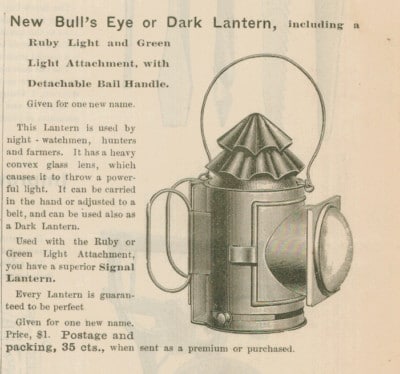
 Even though we're pansters here, and there is that mean, growling word "plotting" hanging around a lot, I'm going to show you that ol' shadow monster is actually the reflection of a puppy dog in front of a bulls-eye lantern.

 (No idea what a bulls-eye lantern is? Here you go. > ) 


Okay, on to the meat of this post.

 So, as I was saying... think about getting your plot-lines figured the same way you approach arranging food on your plate at a buffet. There's no hard and fast rule about the mashed potatoes going in the upper right corner... but you do know that the potatoes had better be between  the creamed corn and the roast with gravy.
 It'll just taste better that way.

 In the same vein,  the exciting dramatic points in your story taste better when dividing up the less sparkly, thoughtful stuff. So keep that in mind when you're spreading your ideas around the arc that you made last time.
This is a real arc I'm in the early stages of using... so I've blurred out specific words! *Spoilers!*

 Boil down your plot points to a spare few words. Two is good. One is even better!
 So, say it's that robber/mystery in Texas from our Road Map post.
 
 The City would go over here at the left hand corner, 'cause that's where they start from. Pencil in "Meet" next to it. You'll have to figure out how they meet later... or maybe you already have an idea. (Is at a cafe, where they both order lunch? Or when the one fender bends the other at a stop light?)

  Maybe the Shabby Hotel would go at the top of the arc, at the midway point. Cause right after that scene our mis-matched protags break up in disgust with each other after the argument... and then travel their separate ways to each find out a different clue which they will use when their paths cross again, (and they've simmered down enough to forgive each other.)

  So put "Shabby Hotel" up  there, sticking out from the arc. Then scribble "argue - split up" underneath that.

 There you have it! Your climactic middle scene.

 So... then, the "Prison" part would be half-way between the two. This is at the place where the Rule of Arc, (or Story Beats) dictate entering the Uncomfort Zone.
  Well, say one of them has a jailbird past, and going back into the pen as a visitor gives him a bad case of raised heart rate.
That's a definite Uncomfort Zone.
 (Poor character. They're just going to get more Uncomfortable from here on out!)

   (Write that. Write the reaction and the self control it takes to make themselves go back behind those iron gates... a testament to their drive and dedication to solving the case.)

 
Keep Updating the Arc Plotter

 
Do you have an end scene in mind? No?

 Not a problem. Do you have any idea how it'll work out?
Yes? Good. Maybe put "Robber Caught" at the other end.

 And when you get the idea; "Oooo! Must write that argument scene at the shortcut!" jot that scene down in it's approximate place. This will remind you what you have so far, and can keep you from writing the same scenes twice.
 (What?! You've never done that? I'm the only one???)

 And if you get a nifty idea, and write a real whip-cracker of a scene, then boil it down to one key word and jot it in on the arc. That way you can easily see your progress at a glance.

 Keep this with you, and whenever you get a really sparkly idea, whip this little plot arc out and jot down the one or two word code that will recall that idea whenever you read it. Then the next time you are at your writing place, just take a gander at this handy little arc sheet, (or big arc sheet, which is better, with more room for jotting.)

 And there you have it!
            Off you go, fingers flying like the wind!

                                      No fears! Just writing!

  Writing... writing...!!!!


  (But seriously... have you ever written a scene, then forgot you'd written it, and then wrote it again, slightly different? And then couldn't decide which scene to keep, because they each had good parts, but totally cannot ever, ever, ever mesh????)
 

Wednesday, November 5, 2014

Plot Arcs: How to Use Them in Your Novel

Example of the Basic Arc
Second post in How to Plot Your Novel series. Here we explore a another technique I use, which can help you Pansters Plot your Novels.

Q: How do you plan a plot arc?

 A: Okay! People have been asking me about my methods of tracking plots, and since I'm a panster this is a big topic with me.

   All of you plotters can take your Excell spreadsheets and binders full of detailed notes for each scene and step outside with those now.


 (...Or you can hang around. You know, just for fun, and to laugh up your sleeve at other people's problems.)

  All right! Onward to glory we go!  (Props if you recognize that song...)

 As a major panster, I've had a hard time coming up with a plotting method that actually works with my "all over the place" writing style. I can't tell you how many different ones I've tried, but most of them failed miserably.

Okay, so here it is! The What Works For Me deepest secrets.


  We all know by this point that story arcs basically kind of have a similar shape all the time.

Like, beginning, middle and end.

   Or Act 1, Act 2, Act 3, if you're into that. (Personally, it always really bugs me that Act 2 has three parts, and they still call it a "Three Act Structure". What?! Who did you get to do your counting for you?)

 Or some people get all into the Hero's Journey, and the book that shares that name.


 Myself, I just want to write the story.
   So here's the "Arc Plot" that enables me to do just that.

 Draw a half circle. (All right fine, it's more than half a circle! Just make a big loop out there that covers most of your paper.)
  Divide this arc in half with a little line at the top. Then divide each half in half with another mark.

 You start at the Ordinary, move to Uncomfort Zone, on 'til you reach Confrontation/Greatest Fear. That is your climax, or the midway point of your story.
 (Some tales' climax is longer than others, and so it can slide into the Deepens Problem territory. That's totally okay.)

 Half way between the middle and the end of the book you come to Hits Bottom. This is a great place where you can have fun with making things look really bad for the protagonists and their dearly held dreams.
 Really turn the lights out on this!

  And then... oops! They turn things around! It's not that bad after all, and they all go home and be cozy in their caves.

   They have faced their fears and mastered them, (as well as the Big Bad). This makes them not only safe once more, but they actually have grown and have a bigger comfort zone than they had before.

  So... everybody wins!

Hope it helps, everyone! :-)

 (And while you're at it, you can get really creative and use the brightest, most diverse range of colors! Make one stand for one thing, and so on, that way you're creative muscle can easily see what's going on and get inspired!!! :-)

 Next time we'll get into the details of how to really make this Arc Plotter your own.

Monday, November 3, 2014

How to Plot Your Novel with the "Road Map" technique

Okay! In honor of November being NaNoWriMo, with all those writers determinedly writing, I thought now might be a good idea to break down and put up those novel plotting posts I've been asked about. 
     (Also, a good idea to write them, first.)

  I'm thinking I'll call this series "How to Plot Your Novel ... or Plotting For Pansters".

Q: I know specific plot points my novel is wanting, but I'm unsure about how to figure out what goes between them. Any suggestions?


A: As a died in the wool panster, this is what I'd recommend! :-)

 Start writing madly with every plot point you have in mind. You can make a "road map" on a piece of paper, jotting down the main important destinations. Big City  - - - -  Visit Prison (to check up with incarcerated witness) - - - - Shabby Hotel - - - - etc.  Then, when you're writing along, and suddenly in the Shabby Hotel your MC yells, mid argument, "I told you we shouldn't have taken that stupid short cut! If you'd have listened to me, we would have been here hours ago, and that little girl never would have been shot in the bank robbery, 'cause we would have stopped it before it happened!!!"
Real, actual road map plot I've been writing from for a couple years now, off & on.

 Then make a note in your road map.

 In between Prison and Shabby Hotel jot down "Short cut - argue about". There you have another scene that you will need to write so readers will know why your MC is so mad about not being listened to.

 You can use symbols, or scribble pictures... whatever will spark your memory later on.

 This is the method I use, and it works really well for me. So long as I am faithfully following the story by putting down on paper the scenes I DO know, the others will generally follow... like clues on a mystery case. As the writer/detective you get a feel for where you need to go, (and take your readers along with you) next.

               Hope this helps!!!
                          Have a good NaNo!
                                           Elizabeth

Monday, May 12, 2014

Killing Characters?


Came upon this interesting article from David Farland recently, Thou Shalt Not Kill.


 The subject is one that I definitely have strong feelings on and I've even had discussions with writers about this element. It is not to be used lightly, and I think I am almost starting to see it as a trap that eager beggining writers seem to be especially suseptible too. Is it the thrill of the kill, the initial rush of power that comes with discovering you hold these fictional lives in your hands?

 The power to make readers feel is truly amazing, and it should be respected and held gently, and not be abused for a quick rush of  reader wreching moment.

   Be brave! Be creative!
   Stand up for the innocents in your stories.


  What do you think?

Tuesday, December 3, 2013

How I did on NaNoWriMo

Okay! November is OVERRRRRR!

 Yes, that is about how happy I am to be able to say that.  It is not like I didn't appreciate it while it was here, but 50k words later, I am very, Very VERY ready to say goodbye to the month and move on to a little different headspace for a while. My creativity is strained and sprained and feeling mighty sore, but the words I got out were mostly good, high quality ones... even if I had to slip into Science Fiction scenarios there at the end.
 (Hey! Some day I'll have a crack-shot group of sci-fi story lines... )

 So, at first I did great. I was like:
Kristen Coco oil paintings
   Oh, yes. I can do this!


  Then on the 5th my sister had a cattle working accident that bashed her teeth in, and we spent all day in town at the oral surgeon's for emergency dental care. I was pretty worried about the situation; stressed and keyed up... and didn't write that day, or the next.
  I barely made any progress the third day, and (I think,) the next two either.

Tiny turtle on keyboard.
  My mojo was just gone. I had nothing to say.
Cartoon stock.

 So shortly I was like:

Sad dog.

 And pretty soon I was like:


Reminder beagle.


 Then I recovered my creativity and started to write. I was determined to make up the lapse, and even pull ahead. 
  At this point I was like this:

Armored Beagle
 I wrote hard, pulling those emotions out of the clouds, making things tough.
 I made it to my goal post, but had a hard time keeping up later.

           I flagged, I felt exhausted.


Dramatic Animals
I struggled to find compelling scenes to drag me back into the world of my tale.

 Then on 13th, it happened. I surged forward! The story was a wild thing, and I was riding it, hanging on for dear life! We sailed forward toward the horizon!
 
Photoshop Disasters
I over shot the line! I got down great scenes, sweeping complications of people trying to do their own thing in a world that draws harsh lines. Hard things. Sad things.
  I fell behind once, but it didn't bother me. The tale was coming, in bursts and snippets. The words bubbled up and sank away again, ebbing and tiding like an ocean of meaning that would fill my cupped hands, and now flee away.
 
 Then it simmered down to a faint  hum, and wouldn't sing to me any more.
via Pinterest
via Pinterest

   
 I researched ancient Rome.

And the legions.

I found shiny pictures.


 But not much inspiration.
via Pinterest
 This was starting to get serious. My lack of fire in the direction of my story was worrying me. Had I overworked the plot? Were there not enough holes for my imagination to play with? Were there too many?

  I cut off into a new direction... pitting hero against a dragon, on a burnt and blasted wasteland.
That was a lot of fun to write, and so I allowed my imagination out to play. I switched between "real stuff" and "playing stuff", and kept on track with the word count goals.

Then it was the thirtieth. And I needed 2000 words by midnight to officially make it.

 I didn't feel good. My brain felt fogged. I was sick.
 
White Tiger
But there it was: the fact!

Feature Pics
  So I tackled what may be the toughest scene in the book. The one where the hero finally understands he has to make the right choice, even if it takes everything from him.

  I typed madly at the keyboard on that afternoon, determined to make it those last couple of thousand.
   I was kind of like this:

Typing madly


 But he fought me. Why would he give everything up? He's had it good, he's done it his way. What would make him change his whole mindset, his whole life? When he has nothing to gain, and everything to loose? Hasn't he already lost enough? Shouldn't he hold tight to the things he has left to him?
    Grrr!!
On the road to Damascus

 So I had him turn aside to a small spring, and there he met a young man. They talked. He pondered. Time slipped away....

 I crossed the 50k line.
Think Stock

 My MC still hadn't decided to commit. All the way in. 

Kingfisher Dive
   But... I was done.
   I didn't feel done though.
        I felt... behind. Like I should have written 60k, or finished 5 days early, or... something.

 Or found a way to resolve this pivotal scene.


But I couldn't find a way. I thought I was getting close, read it to my sister, and she said "That's not a believable change."
     So I quit writing and watched a movie with Dad and was like this:
Watching TV
 

 The next day was December first. 

  I walked around kind of jittery, trying to remind myself that there was no required word count today. That I was free. But I didn't really believe it. Not totally. It hadn't sunk in.
 So I was kind of like this:
 

 Then it was the 2nd.


     It was real.


   I checked my NaNo profile.


 I had written 50k.


  And then I was like:

Exultation
 And this:
Triumphant joy.
 Sure there was a lot left to write. And my hero's turning point would come. Later...
 But right now: there was a whole lot less left to be written.
    
 So that was my November.

 How was yours?

Tuesday, July 2, 2013

What inspired you to write this book?

  I love it when people ask me questions that make me think, especially when they're questions about
my writing.
       Love it!

 One such question is: "What inspired you to write this book?"

 A: "I wanted to write a book about an ordinary girl who, by trying her best at ordinary things, ends up helping in an extraordinary way.
 I wrote the first draft for my younger sister as she turned 16, and I wanted to try to tell her, and everyone else, that we don't have to always look for the "super-big" things in life, that the battle is ALWAYS won in the details.
    "For he that is faithful in little, will be given much..."
 Small things are were it all starts, so I really wish teens could grab a hold of that and nail it deep into their lives, since this is a period of super-important small things for them. What they do here shapes the entire course of their lives, and lessons taken to heart at this time are some of the most reliable ever. It only gets harder to change a bad habit, so Now Is The Hour! Young people have a deep desire for something more, something Big... I wanted to help show them that this IS big.
   You.
     What you become.
       It starts right here, in the details.
         Watch over them, 'cause they're important."

 Whether this book fully encompasses this is up to the reader, and I think that it'd be hard for any single narrative to do that. But I do hope that every book I put out there will be one more block in the foundation of that idea, and that each will encourage people, especially young people, to grasp the Now and change it just a little.

 It makes ever such a difference in the long run.

 What do you think? Does this idea come across in Fia's journey?


Tuesday, January 22, 2013

Reader Interview: Mary Ruth P.

Reader interview: Mary Ruth P., from southwest Missouri!

 Thanks so much for joining us here on E. Kaiser Writes-A-Blog!

M.R.: Thanks so much for having me again! I had so much fun with the writer interview, and I'm looking forward to this one too!

E. Kaiser: As a reader, I know there are a lot of personal opinions involved in what you enjoy, and what you hate, and I do love a good, established opinion. (Especially if it's personal. ;-) )
 So, tell us yours!


M.R.: Wow, that's a loaded question! Let me start off by saying that I have very eclectic tastes in what I read, and (contrary to a fairly common misconception) I'm actually very easy to please. For me, it's very easy to tell when a book was written simply because the author had something they couldn't keep inside, something they just had to say because they loved it and believed in it. I have a wild aversion to reading books where I can tell that the author had some ulterior motive, or that they were writing just to appeal to a certain audience. If a writer has written a story just because they had to tell that story, I can pick that up in the writing, and if the story is exciting chances are I'll like it regardless of genre.

E. Kaiser: That's a very good point.
What's your range of favorite genres? Can you introduce us to the why's of that?

M.R.: Historical fiction is my first love - my mom introduced me to that at age eight, with the Dear America series and later, the Royal Diaries series (both of which I love to this day). I think the reason I love the genre so much is that, even though human nature doesn't change, you get to see it in so many interesting applications in the different situations of history. Plus I love reading a well-researched historical novel and getting to see a faraway place in a long-lost time through a characters eyes.
  I also love fantasy. I read The Chronicles of Narnia when I was ten, but didn't really get into the genre until I became friends with author H.A. Titus as a teenager. She was already a fantasy nut, and it didn't take long for her to recruit me to the cause! I love the opportunities fantasy offers to go all the cool directions history didn't go. I love swords and amazing architecture and long, gorgeous dresses and armor and the challenges (and blessings) of a world where technology doesn't do everything for you.
  The only other genre that I think I can consider a favorite is science fiction. I'll admit, though, I'm a little harder to please in the science fiction department than in other genres. A lot of the same things about fantasy that appeal to me are present in science fiction - the room for imagination, the opportunities to see human nature in unique applications - but a lot of science fiction stories focus too much on the science and technology itself and let the plot drift to the sidelines. That I dislike. I like science fiction as long as the science part is merely a factor of the plot - not the other way around.

E: Among all the basic threads that just about all stories borrow from, what're your favorite story lines?
M.R.: Hmm... I like stories where the hero is reluctant to get involved in whatever the conflict of the story is, has to come to the realization that it's the right thing to do, and then throws himself into it with all he has. I also like stories in which a central character struggles to know or decide which side he or she is on. And of course, any story in which an ordinary little person gets pulled into something far bigger than themselves and becomes a hero is great, too.

E: How about your worst pet peeves? Let us have 'em!

M.R.: Book teasers that give away the story. Romance novels of all kinds, Amish and vampire romance in particular. Melodrama - i.e., shrieking, wailing, gnashing of teeth, weeping, and vomiting over things that really aren't that big of a deal. Over-the-top cliche-ness - "Can Kate and Jason overcome their mutual dislike for each other long enough to solve the murder... and find love along the way?" - seriously, just put me out of my misery!

E:  Ha! I'm totally on that page with you, there!
Okay, how about that Thing-You-Can't-Stand-Above-Anything-Else.

M.R.: Sappiness. I review books for several publishing houses, and one time I accidentally got my name on a list to review this Christian historical romance novel. I almost gagged multiple times. I mean, I've been around guys that I've thought were handsome, but I've never felt "overwhelmed by his masculinity". And although I've never kissed a guy, I find it rather difficult to believe that doing so would make a girl "worried that her bones had turned to dust". I'm very much an action-oriented, keep-it-real kind of girl, and all the pining and wistfulness and mush and gushing emotions in sappy novels just really disgust me.

E: Glancing quickly backward over your reading history, what stands out as the moment that melted your heart, all warm and puddle-y?

M.R.: Well... in spite of how emotional I can get over books, I'm really not a 'warm and puddle-y' kind of person. It's just not the way I'm wired. So I'm afraid I can't think of a single moment that made me feel that way. : )

E: Same thing, what's the first-to-mind scene that fired your emotions?

M.R.: The first thing that comes to mind is the end of the Dear America book Voyage on the Great Titanic. I was... oh, maybe eleven or twelve when I read it, and it's the first book that I remember crying over. The main character had become really good friends with one of the cabin boys, and she got off safely but he chose to go down with the ship and his fellow crewmen. At the time I was pretty sure I would never ever get over it as long as I lived, but I've managed to piece together a normal life since then... barely. ; P

E: ...Made you so mad you couldn't see straight?

M.R.: I was reading The Sword and the Flame, the third book in Stephen R. Lawhead's 'Dragon King' trilogy. The main character (who I had loved in both of the previous books) watched one of his best friends be murdered, so he murdered his friend's killer (who had dropped his weapon and surrendered already) and sort of went mad for the rest of the book and just sulked in his quarters while everyone else was running around trying to save the kingdom. And then all of a sudden, 'poof!' he gets over it and everything goes back to normal after everyone else has been running themselves ragged trying to keep it all together through the whole book. It made me so mad at him that I actually put the book aside for a few months right in the middle. The only thing that brought me back to it was the fact that I cared about the rest of the characters too much not to find out what happened to them.

E: What is your favorite trait in a character, and why do you love them?M.R.: I absolutely love it when a character expects to fail in a task or quest, but does it anyway simply because it's the right thing to do. I love self-sacrifice, protectiveness, and loyalty.   Protectiveness and loyalty in a character appeal to me because they're so central to the way I was raised. From the time my siblings and I were tiny our parents taught us that you look out for the people you love, you look out for people who can't look out for themselves, and you stand with your friends and family no matter what. If they're in the wrong, you correct them, but you don't stop being loyal to them. Self-sacrifice is a part of that too, in a lot of ways, as well as being part of doing the right thing even if and when it costs you. That's a trait I want to possess myself - being able and willing to do the right thing no matter what it costs, and to know that the cost is worth it - so I like seeing it portrayed well in fictional characters.

E: Good one! I like the way you explained that. Very true.
  So, what most makes you  most hate the villain?

M.R.: That's kind of a tricky question, since there are only so many villain-making traits and they're pretty close to universal (e.g. cruelty, self-centeredness, lust for power, corrupt desires, etc.). I guess the thing that makes me hate a villain most depends on how well he's written. Writing a truly evil villain requires a deep understanding of evil itself, and I think a lot of writers either don't have that or are uncomfortable with delving into the understanding they do have. In cases like that, you usually end up with the cliche 'kicks-kittens-and-tortures-servants-for-enjoyment' kind of villain, which bugs me to death. True evil is, quite often, far more subtle than that.
  So I guess, in order for me to really loathe a villain, he has to be realistically evil. The exact details of how that evil manifests itself don't matter nearly so much to me as being able to believe that the villain is truly evil. And of course, the more I love the protagonist, the more I'll hate the villain for hurting him or her. ; )

E:   What was your favorite "switch" that caught you completely off guard, but you loved the result!

M.R.: The first thing that comes to mind is the revelation towards the end of Angela Elwell Hunt's novel The Immortal. There's a moment when the main character and the readers all realize that 'Oh... Asher's immortality wasn't a curse... it was a gift! And I've been missing that for the last 200 pages of the book, but he's been missing it for the last 2,000 years!!!' That moment is a total game changer in the book, but the result is heartrendingly beautiful. In fact I'm getting goosebumps just thinking about it! : )

E:  What small things do you especially like to see included?

M.R.: I love it when books talk about the food the characters eat. The Secret Garden and the Redwall books are particular instances that come to mind. The food in those books always sounds so delicious! Of course, I always end up having to put the book down and go find something to eat because just reading them makes me hungry, but it's a really nice detail to include. I think more authors should write about food in their stories. There's a special kind of happiness that really good food makes people feel, and weaving that into the happiness of loveable characters and exciting adventure just adds another layer of delight to a good book. : )

Thanks for joining us, Mary Ruth!

You're so very welcome, Elizabeth. This has been a lot of fun and I've really enjoyed it. Happy reading, everyone!
~Mary

Tuesday, November 20, 2012

The Last-Part-Of-The-Middle-Is- SOOO Hard!

Okay. I think we have a bunch of writers out there, so I'm asking this question of you.
 Yes, you.

 Don't think I'm talking to the person behind you.
 (Not that there is anyone, since you're on the computer... but, you know, figuratively.)

 What do you do when you've got the lion's share of the plot worked out, you've got most of the scenes written down. You even have the ending done.
 And you've got all those pesky links to link up... and you've been working on this project for SO Long, sweating over it to make it perfect.

 Your brain revolts and your interest plunges to unchartedly deep places in the black ocean...

 And now you just want to chuck the thing and take a long walk off a short pier?


 All you want to do is yell "HELLLLPPPPP!" at the top of your lungs and have some celestial being sweep in on golden wings, slap the manuscript together and say, "There. Done."

Red Line= Writing Ideal ~ Green Line= Reality
 I'm hitting the hard, gravel grade that comes before cresting the summit on mountain roads. Have you ever climbed a mountain road?  (Agony!)
 I have, and believe me, the stretch right before the top is when you're murderously thinking "Who's dumb idea was this? It's not worth it! I can't believe I let anybody talk me into this." And "....why don't I turn around and go home....?"

 That is also what happens in novel writing. But it is of course your own idea, and so you can't blame anyone else.

 So, here we are.
  We're past the halfway mark, and not yet to the finish, and that is always the hardest part!

  The very last gasp!
      (But it takes so loooong!)

 
 How do you handle that "last part of the middle is soo hard!" feeling? Do you have ways of combating?
 Tell me!

 I need HELLPPP.

Tuesday, November 6, 2012

Q&A: How do you get your ideas?

 Okay, this has to be a question most creative types are used to being asked, but it seems like it's a perennially popular one in the bargain. In fact, it's a question I, myself  love to "listen in" on when it's being answered; so it will probably be around for a long time yet!

 Q:  How do you come up with your stories? Do they just pop into your head, or do you search for them?

 A:  For me, stories definitely pop into my head; sometimes they'll be sparked by another thought, sometimes not!
  Sometimes they won't leave me alone... for months. When that happens I usually give in; even if I have another project I'm in the middle of.
 I have lots of stories in various stages at any particular time, so I'm definitely a "messy writer" in that respect. ;-)

 What about you?

Tuesday, October 30, 2012

Kill the Character; any character?

 I mentioned last week during the Reader Interview with Heather McD. that I was on the same page with her as far as character killing went. In retrospect, I may have been hasty in my statement, because she didn't elaborate on her thoughts. So here's mine! Smile

 ...Earlier in the season I got to talking with a writer on FB about killing characters... and how writers are wont to do so. Usually in the name of suspense and reality.
 Kind of brought a whole Kill the Character theme to mind, and I rethought how this actually affects the reader.
 As a beginning writer, I used to be a big fan of killing characters... especially after I'd made them likeable. (I know! How cruel!)

 Back then, I once killed someone in a piece, and let my little sisters start reading it before I was quite done with the finish. They howled so heart-brokenly, I hastily resurrected him in the finale. (I have to listen to my readers!) 
And, for the record, they were very relieved. 
    And upon later review... (much later) I found I agreed with them.

 So I learned something from the outrage engendered by the proposed-and-nullified killing, even though it took me until just recently to realize it. (Years after the incident! Yes, sometimes I am a slow thinker. Smile )

  All this killing that I was expecting to be "necessary for tension amping" really... wasn't.

 I could kill off a totally random character and the This-Villian-is-Evil point carried with the same impact, and less anguish.

 It was an epiphany. I don't have to kill my personable characters.... If I am tired of them I can send them on a cushy retirement to the Bahamas and they can simply exit stage left with no audience outrage.

  To re-test this theory out on myself I asked; "As a reader, when did you enjoy a sidekick character dying? In what book were you glad one of the good guys got it?"

 The answer was: Never.
 And: None.

  I am always left wishing the author could have come up with a more clever and less final method of whittling down the good team so the Hero could stand alone against Ulitmate Evil.

 -Wounded in action?
 -Fell into a paralysis-inducing liquid?
 -Breathed the coma-vapor?
 -Locked in the outhouse?

 When random, likable characters are killed for "tension upping" purposes,  I always find myself mentally yelling at the plot line, "Come on! Get creative! Stop the brutality!"

  {Disclaimer: I like a thriller as well as anyone. I love a good adventure/action plot. Assassin's and warmongers are right up there. But to build a persona that is relateable and well liked, just so the author can kill them off and enrage the reader... is a cop out, and actually backfires. I will distance myself from a story if one of my favorite characters is ruthlessly chopped for suspense's sake. I am no longer invested in this tale... I'm just finishing it, 'cause that's what I do.}

  Books, movies... I'm forced to go back through and mentally reweave the story to save my favorite side-characters lives.

 So; is this the kind of feeling I want to leave readers with?
  I have to answer for myself... No.
                                                        Not at all.
  I'd way rather have a book that sarcastic people could shout "Unrealistic!" at, and keep fans happy with the final chapter. After all, all stories take leave of "total reality" one way or another, or else who would want to read them?
  We go to Story to be uplifted and made to feel better...

 So I have reformed my murderous ways, and now I know why.


   What do you think? Have you ever been glad a good guy "got it"?

Tuesday, October 23, 2012

Reader Interview: Heather McD!

 And here's the first in a series of Reader Interviews, getting the perspective of those wonderful, imaginative folks who delve headfirst into book-worlds and come out the other side with definite opinions on what they just experienced.
 For our first bold reader, we've got Heather McD. from Missouri with us today.
 
 Thanks so much for joining us Heather! I love the fact that even though you're currently a "young adult", you've got a lot of thoughts on what you do or do not appreciate in your reading fare. Good for you for being a "thinker"!
  Okay, we'll jump right in.

E. Kaiser: What are your favorite kind of books?

Heather McD: I tend to prefer action-packed books overall. Mainly fantasy and sci-fi, but from time to time I will read other genres.

E: How about your worst pet peeves? Let us have 'em!


H: Hm. Well, one of them are a good guy character feeling betrayed by another good guy. Now, I'm not talking about “You handed me over the enemy” sort of betrayal. I guess it's more like the trust was broken between the characters. Generally speaking, it's over done. Instead of feeling sorry for the betrayed character, you wished they'd get over it. Move on! All because they didn't tell you they came from a different world twenty years ago doesn't mean they're on the wrong side!

E: Oh, good one. I can't get what the authors are thinking on that one, either. Just "What?!"

Smile
 Okay, how about that Thing-You-Can't-Stand-Above-Anything-Else.
H: When everybody dies. Or when a few minor characters die. You get my drift.

E: Ouch. You're right. That's a major depression trip...

  Glancing quickly backward over your reading history, what stands out as the moment that melted you heart, all warm and puddle-y?
H: Well, I don't know about my heart melting, but I remember a scene I read in a novel my sister, Shannon, is still in the process of writing. A young man was giving a sad, for lack of better terminology, history lesson that was deeply related to him. It's more touching than that, but I can't tell you exactly because I'd give something away. Smile

E: All right, we'll let you keep secrets.
Smile
Same thing; what's the first-to-mind scene that fired your emotions?

H: Oh, there have been lot's of scenes, but the one that comes to me first is a scene in Never the Bride, by Cheryl McKay and Rene Gutteridge. It's about a girl who's in her mid-thirties, and all she wants to do is to get married. But the scene I'm referring to is near the very end, when she's extremely disappointed by a prospect. Being hurt and angry, she runs to the beach yells at God. Face-to-face. You'd have to read it yourself to completely understand.

E: So... what is your favorite trait in a character, and why do you love them?

H: Two traits I like: quirky and a good sense of humor. Quirks, even little ones, makes the character more interesting. A good sense of humor because I love to laugh. Smile

E: What most makes you most hate the villain?

H: To make the villains seem real to me, he has to be intelligent, not boasting in front of the good guys, doesn't lose his temper whenever he hears bad news, and doesn't kill unless he thinks he needs to. Villains like Hopper from A Bug's Life or Mother Gothel from Tangled. Now those villains were scary! And they did it without needlessly killing two or three characters!

E: Oooo, Mother Gothel was definitely scary.

 What was your favorite "switch" that caught you completely off guard, but you loved the result! 
 
H: The very first thing that comes to mind was some mystery book I read a while back. River's Edge, by Terri Blackstock. She picked a person I wasn't expecting to be guilty. And, as most people know, if you read enough of mystery books, they can be awfully predictable.

E: Too true! It's nice when there's a little mystery added back into mystery stories.

What small things do you especially like to see included?

H: I wish authors were less descriptive about violence. It bothers me when they dwell on it. I also would like it if authors wouldn't kill their minor or not-so minor characters so much. 


E: Aha! I think I know what you mean! In fact, I agree very much on the violence-turning-just-gory subject.
 As for the character killing issue, I've got a post coming up on just that topic! I'm on that same page with you there, too. (And I hope you'll stop by and post your comments on next week's post on that subject!)

 Thanks so much for visiting, Heather! I loved your responses, and I'm sure there are a lot of other folks out there that think along the same lines.


 ~ ~ ~ ~ ~ ~ ~ ~ ~
Want to let your thoughts be known? 
Send me an email at ekaiserwrites-at-hotmail and we can get you lined up! 
The more the merrier, you know. ;-) Join the conversation!

Wednesday, September 12, 2012

Pixar Rules of Story?

 Hey! Have you seen these?

22 Rules of Pixar Storytelling

 I hadn't, 'til now.

 What do you think of them?

 I'm kind of tickled, myself! There's a lot to think on here, and plenty to take away back to our 'dens' to mess with and figure out how to work them into our writing.
 I like #1. It's very true.

 #2 is also good, though hard to keep in mind.

#3, is kind of... ouch! That hurts.
 But is probably true.

 Well, they're all pretty good.

 Which are your favorites?
 Tell me!

Wednesday, June 6, 2012

The First Piece You Ever Wrote

"What got you started writing?" That's a common question for writers to receive. I've posted about how that happened with me here.
 But I came across a different, and possibly much more meaningful question. "What was you're first writing experience?"
 And remembering it explained a lot of things to me, that I hadn't made a connection between before.

  As I recall, my first "story" was when I was nine. When I gave it to Mom I didn't intend for her to read it out loud, but she must have thought it was something special; 'cause she did.
 (Um... maybe she thought it would be encouraging to me? Well...)
 My siblings laughed, and their laughter wasn't the "that's hilarious!" kind. More like... ridiculing. Even homeschoolers have to deal with a peer group that isn't always kind! ;-)
  Anyway, my two older sibs weren't impressed. At all. It kind of got a "Who do you think you are? Some writer or something?" reaction. Pretty dampening.
  Not that the story was stellar! I mean, I was nine. It was no literary marvel. But still...
 The event kept my nose in a book and my hands away from creating fiction for some time.  It wasn't until I wrote a particularly well-liked letter that I even considered I might have any talent with the words I loved very much. (As kids, we always gave our letters to someone older to check for spelling.) This one received some critical acclaim, which surprised and encouraged me.
  I thought; "Wow. Maybe there's something special about my writing after all." Which was a nice boost, and I applied myself to the art of writing letters well; until I was about thirteen, and got enough courage up to try fiction again.
 Mom also is a lover of poetry, and did encourage that, so I wrote some...
 But again... the sibs see it and you'll get scorned!
 Hide the poetry!
  IF you show it to Mom, make sure nobody else is around! :-)
 
  In my late teens, when I was actively seeking feedback on my writing, I would be palm-sweating nervous when I actually handed it over. (I desperately wanted to hear their reactions, but was in a cold sweat at the same time.) Even if it was only to Dad, who has a huge and undemanding appetite for the written word in all its forms. (And is possibly my surest, and blindest, fan. He loves everything I write... which makes me doubt his judgement! But I love him for it anyway!)
  
  To this day I get pretty nervous when I show my work to others. I've gotten better, and braver... but it's still there.

 What was your first writing experience? Did it make you scared of sharing, or did that come later? Tell me I'm not alone here! ;-)