Showing posts with label Writing How-to. Show all posts

Tuesday, March 22, 2016

Do You Know Your Definiton of Success...?

 It's always important to know where you're going, and not simply chase what someone else "says is worthy". You've got to know your own definition of success, and then recognize it when you get there.
  As an author, here are some questions that are good to ask:


What made you decide to publish your work?

I have wanted to be an author since I first leaned how books came to be, and coming from a business-acumen type family, the money is what proves success. That is in my blood, so that's one thing that is always a consideration for me. I write very niche, and dreams of a big advance were tantalizing but unrealistic. I was scared to go self-pub, as someone without much of  a"people you know" network I figured that would be money wasted. (And that was right.)
 Attending a conference where the buzz was all about e-books got me to thinking about releasing in that medium, which I did for the first time in 2011. It was affordable, and was an invaluable step, it gained me some fans and I learned a whole lot through the process. Book 2 in the series released July 2013, and I finally feel like I have my head above water on all this online marketing stuff. I'm still not hardly any good at it, (and sales are super low) but at least I understand what marketing gurus are talking about! Emoji
  At this stage I am writing madly, fully committed to the process of becoming a successful author and intent on having the 7-10 books out that status seems to demand... I've followed indie authors who are successful, and their "slow start" mantra makes sense, so I'm in it for the long haul. I know my work is good, it's received praise from such a wide range of readers, so all I have to do is put the time in and be diligent. I believe, (with the Lord's help!) that I can make a small income off of my writing, and I'm setting my sights on the future.

What keeps you going on the tough days?


 I remember how much I was shaped by the books I read as a teen, and I really, really want to have my stories help youngsters, (and oldsters,) inspiring and directing them upwards on the trail of life. This, and the fact that the writing is in my veins, it seems, and I can't stop. Even if all the words were deleted every month, I would keep writing. (I just wouldn't agonize over finishing anything in that scenario, since it wouldn't matter! So I'd just do the fun stuff and skip all that editing! Emoji )

What would you consider success for your author career?

Straight up? Money talks: and I would like to make at least part of a living with my books. I know others are doing way better than that, (genre is big here though so... romance, erotica, and thrillers seem to be easiest to make a good living with) but if I could bring in a small slice of actual cash with my words, I'd consider myself totally successful. 


 Short of that, there are other levels; being recognized as an "author" when meeting in Real Life friends I've only known online.

     That's nice.
                      That's happened. 

 Being respected as a "good writer" in online circles. 

        That's nice.
                       That's happened.

 Having a fan friend me on FB because they read something I wrote and loved it. 

      That's super nice.
                       That's happened.

 As I become more adept at my social media presence and my connecting circles expand, that reputation factor will continue to grow, and at some point I hope to be a presenter at a(/some) conference(/s) on world building/ how to pick the best clothes for your author photos/ descriptions that sing... I'm not too picky. But that would be very nice, and I think that will happen.  (I've got big ideas on how to attend conferences!!!
Emoji)

 Other than that? 7 books, in print, on my shelf, and knowing that people are buying them. That would also be a success... and I think it's in the future.

  It's always interesting to think about these questions! Re-evaluation is a major tool, and although I'm no closer to knowing exactly how to make this stuff happen, being clear on intentions helps one recognize steps when they come along. Emoji 


   How about you? What's your definition of success? 

 And when you look at the world and the writers in it, what makes you think "That author is a success!" I'd LOVE to hear your take on this one!!!

Tuesday, March 15, 2016

Slick E-book Sales Graph!

  With all the attention that e-publishing has been getting lately from just about everyone in the chain of book-to-reader, sometimes I wonder what is actually happening. Who is getting famous, making lots of money, etc.?
  Can we find some statistics somewhere, to get a better image in our heads?
The answer is... Yes! Actually, I just did; I came across this super interesting post by Derek J. Canyon over on his info-rich blog, Adventures in ePublishing. 
  He put together a highly interesting set of graphs and statistics, and this is my favorite. Straight up, the best selling e-book genres, all ina nice handy pie chart.  (I love pie charts! So easy on the brain.)


 What do you think? How much would the best-selling-ness of a genre influence you toward writing it?

Wednesday, March 9, 2016

Free Write to Free Up Creativity

Hey Everybody!
 If you are stuck on your ms. this is something to try: free write. Just start typing, throw the words down... they can be anything, everything, something stuck in your head or song lyrics, just don't stop. Don't guide them, just "blab"...onto the page, and let it go! (Yes, they totally stole my line. ;-) )

It can get you past the scared stiff feeling, adn once you loosen up your fingers you can then step back and assess what you're doing wrong in your ms.

 Mostly, if it freezes on you then you're trying to do something you shouldn't, plot wise, or else you don't know how things work. So get out the crayons and make a calendar, timeline, put in the main scenes you KNOW will happen. Then ask ?s of stuff, play around. Have fun!

'Cause if you don't have fun with it, your readers won't enjoy it either. Think of six different things that could "chain" out from the scene you know, and then come up with a seventh. Which feels more "true" to character? Which feels most FUN?! 

Tuesday, May 5, 2015

Why Section Breaks? ;-)

Here's just a handy-dandy link to a nice person's blog post sweetly explaining the reasons why one should use section breaks instead of page breaks when formatting in Word.
 http://noelleryan.com/2012/01/01/section-breaks-and-createspace/

 Yes.
  I am definitely likely to need this again, so I am putting it here.

 And if any of you lovely people need something like this, you can click through and learn something (which will probably make your head hurt... so be warned. Formatting is not for the faint of heart!)

   Hang in there!!

     Elizabeth

Friday, November 21, 2014

How To Plot Your Novel: Into the Arc Theory

Third post in How to Plot Your Novel series. Here we explore an in depth look at the "Arc Theory" technique introduced in the last episode of my very own tips; Plotting For Pansters.

 Q: How do I know where to put my plot points? How do I know what plot points to put there?!!!

A:  Never fear! Stay calm. There is absolutely no reason to panic.
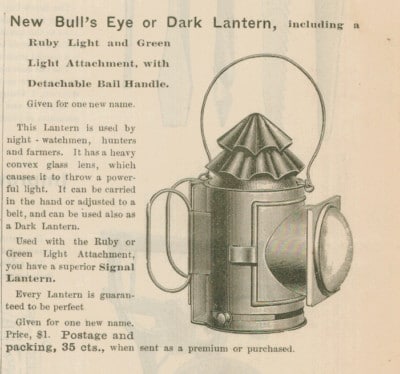
 Even though we're pansters here, and there is that mean, growling word "plotting" hanging around a lot, I'm going to show you that ol' shadow monster is actually the reflection of a puppy dog in front of a bulls-eye lantern.

 (No idea what a bulls-eye lantern is? Here you go. > ) 


Okay, on to the meat of this post.

 So, as I was saying... think about getting your plot-lines figured the same way you approach arranging food on your plate at a buffet. There's no hard and fast rule about the mashed potatoes going in the upper right corner... but you do know that the potatoes had better be between  the creamed corn and the roast with gravy.
 It'll just taste better that way.

 In the same vein,  the exciting dramatic points in your story taste better when dividing up the less sparkly, thoughtful stuff. So keep that in mind when you're spreading your ideas around the arc that you made last time.
This is a real arc I'm in the early stages of using... so I've blurred out specific words! *Spoilers!*

 Boil down your plot points to a spare few words. Two is good. One is even better!
 So, say it's that robber/mystery in Texas from our Road Map post.
 
 The City would go over here at the left hand corner, 'cause that's where they start from. Pencil in "Meet" next to it. You'll have to figure out how they meet later... or maybe you already have an idea. (Is at a cafe, where they both order lunch? Or when the one fender bends the other at a stop light?)

  Maybe the Shabby Hotel would go at the top of the arc, at the midway point. Cause right after that scene our mis-matched protags break up in disgust with each other after the argument... and then travel their separate ways to each find out a different clue which they will use when their paths cross again, (and they've simmered down enough to forgive each other.)

  So put "Shabby Hotel" up  there, sticking out from the arc. Then scribble "argue - split up" underneath that.

 There you have it! Your climactic middle scene.

 So... then, the "Prison" part would be half-way between the two. This is at the place where the Rule of Arc, (or Story Beats) dictate entering the Uncomfort Zone.
  Well, say one of them has a jailbird past, and going back into the pen as a visitor gives him a bad case of raised heart rate.
That's a definite Uncomfort Zone.
 (Poor character. They're just going to get more Uncomfortable from here on out!)

   (Write that. Write the reaction and the self control it takes to make themselves go back behind those iron gates... a testament to their drive and dedication to solving the case.)

 
Keep Updating the Arc Plotter

 
Do you have an end scene in mind? No?

 Not a problem. Do you have any idea how it'll work out?
Yes? Good. Maybe put "Robber Caught" at the other end.

 And when you get the idea; "Oooo! Must write that argument scene at the shortcut!" jot that scene down in it's approximate place. This will remind you what you have so far, and can keep you from writing the same scenes twice.
 (What?! You've never done that? I'm the only one???)

 And if you get a nifty idea, and write a real whip-cracker of a scene, then boil it down to one key word and jot it in on the arc. That way you can easily see your progress at a glance.

 Keep this with you, and whenever you get a really sparkly idea, whip this little plot arc out and jot down the one or two word code that will recall that idea whenever you read it. Then the next time you are at your writing place, just take a gander at this handy little arc sheet, (or big arc sheet, which is better, with more room for jotting.)

 And there you have it!
            Off you go, fingers flying like the wind!

                                      No fears! Just writing!

  Writing... writing...!!!!


  (But seriously... have you ever written a scene, then forgot you'd written it, and then wrote it again, slightly different? And then couldn't decide which scene to keep, because they each had good parts, but totally cannot ever, ever, ever mesh????)
 

Wednesday, November 5, 2014

Plot Arcs: How to Use Them in Your Novel

Example of the Basic Arc
Second post in How to Plot Your Novel series. Here we explore a another technique I use, which can help you Pansters Plot your Novels.

Q: How do you plan a plot arc?

 A: Okay! People have been asking me about my methods of tracking plots, and since I'm a panster this is a big topic with me.

   All of you plotters can take your Excell spreadsheets and binders full of detailed notes for each scene and step outside with those now.


 (...Or you can hang around. You know, just for fun, and to laugh up your sleeve at other people's problems.)

  All right! Onward to glory we go!  (Props if you recognize that song...)

 As a major panster, I've had a hard time coming up with a plotting method that actually works with my "all over the place" writing style. I can't tell you how many different ones I've tried, but most of them failed miserably.

Okay, so here it is! The What Works For Me deepest secrets.


  We all know by this point that story arcs basically kind of have a similar shape all the time.

Like, beginning, middle and end.

   Or Act 1, Act 2, Act 3, if you're into that. (Personally, it always really bugs me that Act 2 has three parts, and they still call it a "Three Act Structure". What?! Who did you get to do your counting for you?)

 Or some people get all into the Hero's Journey, and the book that shares that name.


 Myself, I just want to write the story.
   So here's the "Arc Plot" that enables me to do just that.

 Draw a half circle. (All right fine, it's more than half a circle! Just make a big loop out there that covers most of your paper.)
  Divide this arc in half with a little line at the top. Then divide each half in half with another mark.

 You start at the Ordinary, move to Uncomfort Zone, on 'til you reach Confrontation/Greatest Fear. That is your climax, or the midway point of your story.
 (Some tales' climax is longer than others, and so it can slide into the Deepens Problem territory. That's totally okay.)

 Half way between the middle and the end of the book you come to Hits Bottom. This is a great place where you can have fun with making things look really bad for the protagonists and their dearly held dreams.
 Really turn the lights out on this!

  And then... oops! They turn things around! It's not that bad after all, and they all go home and be cozy in their caves.

   They have faced their fears and mastered them, (as well as the Big Bad). This makes them not only safe once more, but they actually have grown and have a bigger comfort zone than they had before.

  So... everybody wins!

Hope it helps, everyone! :-)

 (And while you're at it, you can get really creative and use the brightest, most diverse range of colors! Make one stand for one thing, and so on, that way you're creative muscle can easily see what's going on and get inspired!!! :-)

 Next time we'll get into the details of how to really make this Arc Plotter your own.

Monday, November 3, 2014

How to Plot Your Novel with the "Road Map" technique

Okay! In honor of November being NaNoWriMo, with all those writers determinedly writing, I thought now might be a good idea to break down and put up those novel plotting posts I've been asked about. 
     (Also, a good idea to write them, first.)

  I'm thinking I'll call this series "How to Plot Your Novel ... or Plotting For Pansters".

Q: I know specific plot points my novel is wanting, but I'm unsure about how to figure out what goes between them. Any suggestions?


A: As a died in the wool panster, this is what I'd recommend! :-)

 Start writing madly with every plot point you have in mind. You can make a "road map" on a piece of paper, jotting down the main important destinations. Big City  - - - -  Visit Prison (to check up with incarcerated witness) - - - - Shabby Hotel - - - - etc.  Then, when you're writing along, and suddenly in the Shabby Hotel your MC yells, mid argument, "I told you we shouldn't have taken that stupid short cut! If you'd have listened to me, we would have been here hours ago, and that little girl never would have been shot in the bank robbery, 'cause we would have stopped it before it happened!!!"
Real, actual road map plot I've been writing from for a couple years now, off & on.

 Then make a note in your road map.

 In between Prison and Shabby Hotel jot down "Short cut - argue about". There you have another scene that you will need to write so readers will know why your MC is so mad about not being listened to.

 You can use symbols, or scribble pictures... whatever will spark your memory later on.

 This is the method I use, and it works really well for me. So long as I am faithfully following the story by putting down on paper the scenes I DO know, the others will generally follow... like clues on a mystery case. As the writer/detective you get a feel for where you need to go, (and take your readers along with you) next.

               Hope this helps!!!
                          Have a good NaNo!
                                           Elizabeth

Thursday, September 4, 2014

Blast from the Past: Why I write.


Click here to Pin!
   I was searching for something the other day in my various stacks of repositories, and came across a paper with this written on it.
   I remember writing this... but I can't remember exactly when. I think it may have been as far back as eight/ten years ago... or maybe not that many, I can't place it for sure.
 Anyway, here it does:


"Why do I write?

 Why do you dream?

 When I write, life recedes a distance and I am on a different level... where the temperature drops on the mist of my thoughts, condensing then into drops of words.

  Then, like dew on a spiderweb... stringing into sentences and paragraphs. Images and feelings, swirling and fading, in and out.
 
 I wanted to write because I loved reading so much as a youngster. I wanted to contribute something good back... and that's never changed.

 When I emerge I am refreshed; renewed.

 Day-to-day returns and I can face it with a cleared perspective.

 ...I have learned something from myself."


  What do you think about that?

       Why do you write? Hm???

Thursday, July 24, 2014

Guest Posting on Vaguely Circular

Hey! I'm a featured guest poster recently over at Vaguely Circular's Imagine This! celebration of
creativity.
 I maybe should have given everyone a bit more notice, but it just snuck up on me!

 Oh, well!

 In other news, I'm over 20k on my July writing, so that means I've reached my Camp NaNo goal. Should I reset my official goal to 30k, or just keep that as an unofficial goal?
 What say you all?


 Anyway, on the my guest post opening!

 "It seems a lot of ideas come from dreams, and I have a theory that dreams and spec-fic actually are located in the same place… as in, spec-fic is stories set entirely in the dream world, that is why they work, and why they appeal.
Because we are waking when we read them, our conscious minds demand the stories follow their own internal logic and rules (unlike dreams); but, so long as they’re consistent, writers can get away with anything… because we all know in dreams, anything goes.
I’m known for active and colorful dreams, and there was a stretch..."

 Go check the rest out on Vaguely Circular!